Birds vanish into one opening
A repeat entry path beneath an eave, behind a sign, or through a structural gap is different from simple ledge perching.
Phoenix metro bird control
Close the gaps, cavities, eaves, beams, and structural openings birds are actually using.
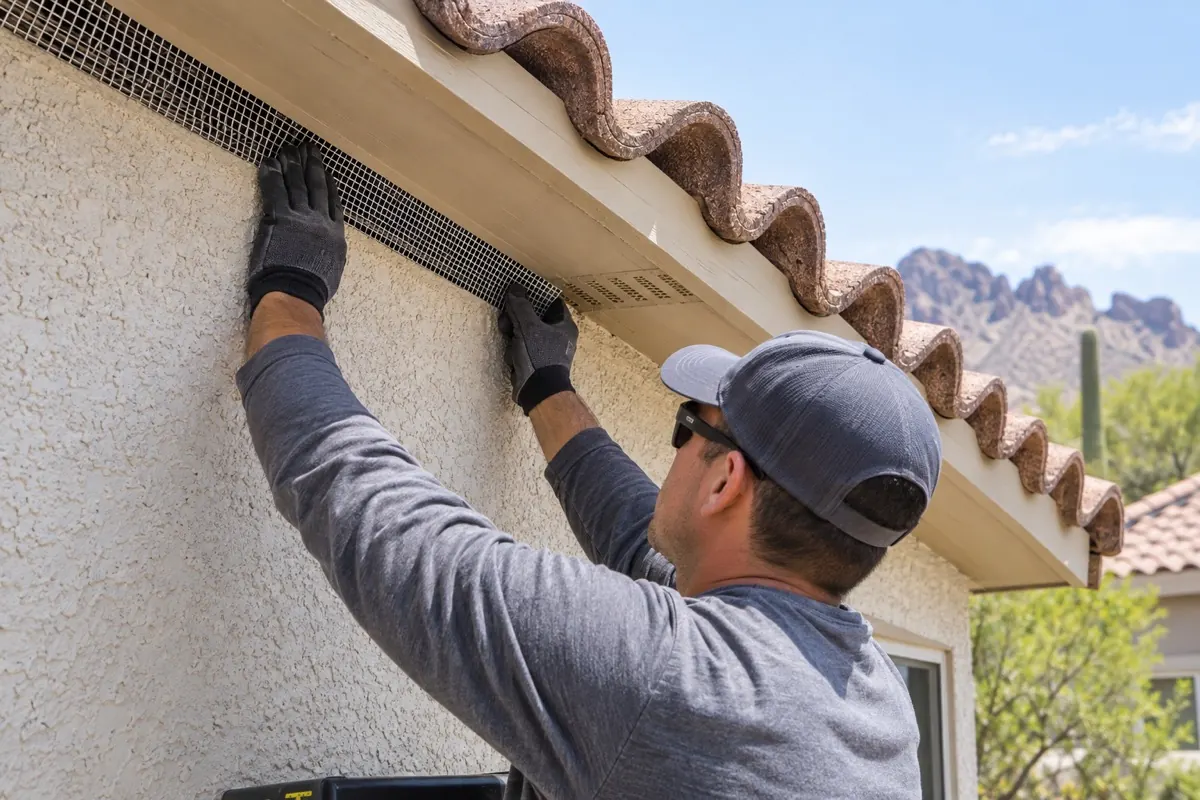
Bird Exclusion
When birds keep finding the same opening, ledge, beam, or sheltered corner, the problem is usually access. Good exclusion closes the spaces birds are actually using while preserving the look, access, and maintenance needs of the property.
What to look for
A repeat entry path beneath an eave, behind a sign, or through a structural gap is different from simple ledge perching.
Twigs and feathers behind louvers, fascia, or equipment screens indicate the opening needs species-appropriate closure.
The stain line can help trace an overhead beam pocket, sign seam, or roof return that is difficult to see.
Closing only the most visible hole can leave an adjacent seam or maintenance opening available.
Recommended approach
The objective is not to cover the building indiscriminately. It is to identify the usable openings, confirm what is inside, and install a durable barrier without blocking drainage, ventilation, or required maintenance.
Observe where birds approach, pause, and disappear rather than assuming the nearest gap is the source.
Confirm whether the opening is actively used and whether nest status affects timing.
Shape mesh, screening, netting, or another barrier to the actual opening and surrounding material.
Preserve access to equipment, drains, fasteners, hatches, and areas that must remain serviceable.
Fit and limitations
Process
Trace approach paths and inspect the full edge or cavity.
Identify ventilation, water flow, fire, equipment, and maintenance needs.
Close the usable opening with material appropriate to its size and surface.
Check nearby seams and returns before they become the replacement entry.
What affects scope
Related services
Pigeon control for recurring roof, patio, ledge, and solar-panel problems
View serviceBird netting for canopies, loading docks, courtyards, and other large overhead spaces
View serviceHumane bird deterrents chosen for the surface, access, and way birds use the property
View servicePigeon removal and exclusion around rooftop HVAC units and equipment platforms
View serviceService area
Bird Exclusion FAQs
Entry paths, droppings, feathers, nest material, and observation of approach behavior help distinguish the active opening from nearby unused seams.
No. Some openings support airflow, drainage, equipment operation, or maintenance. The barrier has to preserve the function of the building detail.
Species and nest status should be evaluated before closure. Sealing an occupied cavity can harm birds and create odor or access problems.
Visibility depends on the opening and material. Color, setback, and the building's sightlines can often be considered without weakening the closure.
Describe the opening, eave, beam, sign, or sheltered corner birds are entering.